
Cross-border private car charter insurance is not just about asking how much a car costs, but about arranging port time, vehicle qualifications, documents, luggage, customs clearance routes, and final destinations together. This page breaks down "HK-Macau Cross-Border Premium Charter insurance and responsibility division: who pays for accidents / how much is the coverage / what to do if there are issues with documents" paragraph by paragraph, first clarifying the official opening hours and regulatory boundaries, and then providing vehicle options suitable for business, family, wedding, or medical scenarios. If your itinerary spans Hong Kong, Macau, Zhuhai, or Shenzhen, it is recommended to first organize the number of people, luggage, types of documents, and required arrival time according to the checklist in this article, and then let the dispatcher confirm the available ports and vehicle types.
Compare Hours at 5 Major Border Crossings
01 / 07 Third-party insurance cannot be resolved with a single policy
The first step in cross-border insurance for private car charter is to determine whether "one-vehicle direct transfer is required" or "port transfer is acceptable". The main planning points are overlapping insurance coverage across three regions, passenger insurance of at least HK$10 million, lost luggage, refund for refused entry, cross-border claims process, and five mandatory clauses. These points directly affect departure time, port selection, and driver scheduling. For passengers, the advantage of direct transfer vehicle is that luggage does not need to be repeatedly moved, elderly and children do not have to walk much, and there is no need to hail a new car at unfamiliar ports at night. The alternative vehicle solution may be cheaper, but it involves waiting, communication, and weather risks. If there are elderly passengers, strollers, wedding dresses, medical supplies, or multiple business materials, do not only compare one-way quotes, but also compare the number of pick-ups and drop-offs, walking distance, waiting environment, and whether the driver can assist in communication at key nodes. We recommend specifying the "latest arrival time" to be 30-90 minutes earlier than flights, meetings, or important events, as peak port traffic does not always occur during traditional commuting hours.
- First, confirm the main keyword: cross-border private car charter insurance, and verify whether the passenger's documents cover the Hong Kong, Macao, or mainland China segments.
- Reconfirm the port opening hours, and prioritize retaining the 24/7 port as an alternative for night trips.
- Finally, it is confirmed that only the seven models of the current fleet list will be used, and no temporary replacement of vehicles not yet in the inventory will be made.
02 / 07 The bottom line of third-party liability insurance in Hong Kong
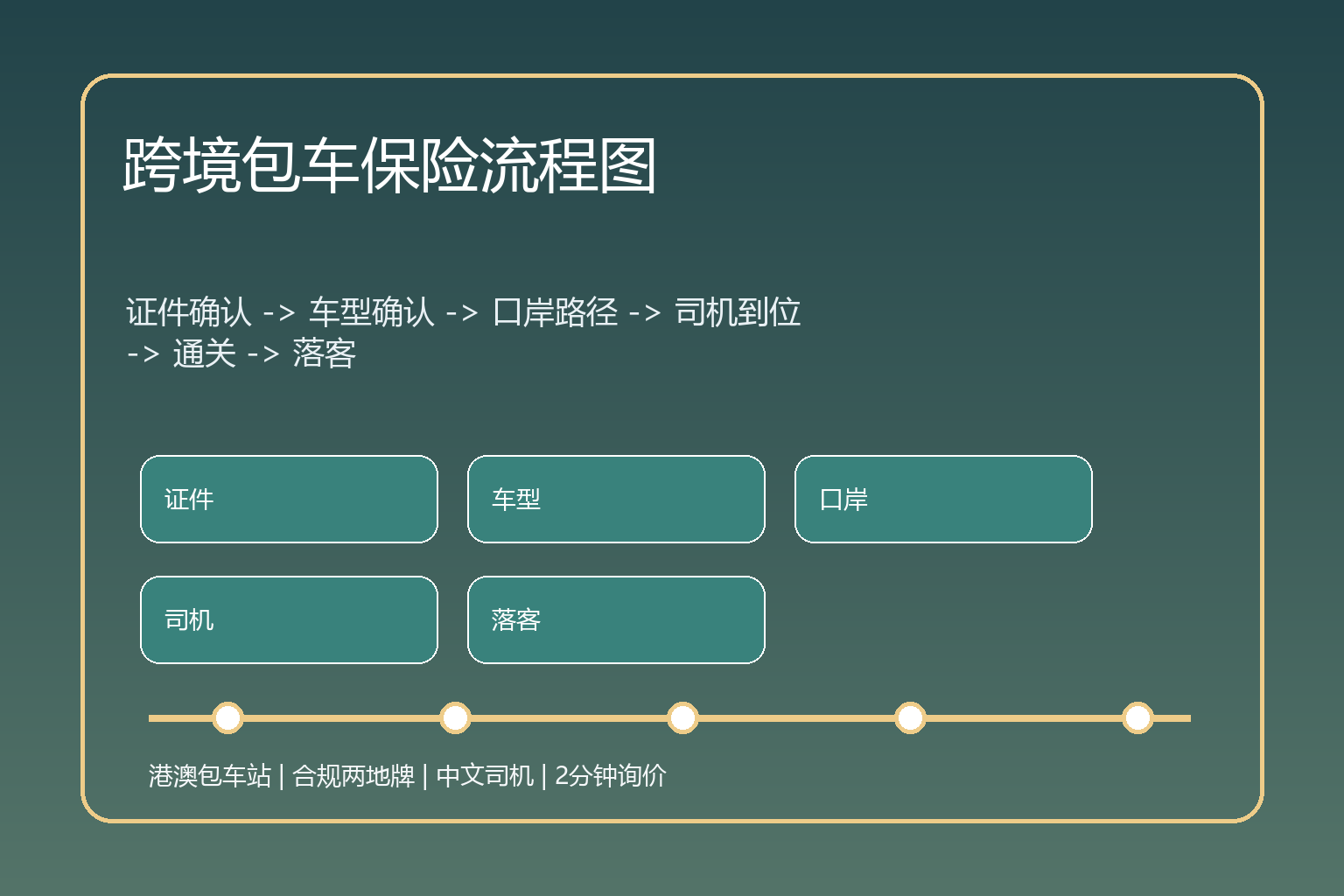
Cross-border customs clearance is not a single window action. Passengers still need to prepare valid travel documents, and vehicles must also meet the corresponding port access permit and insurance requirements. During holidays, exhibitions, concert endings, or inclement weather, waiting times can be extended. Therefore, the private car charter scheduling must include official opening hours, driver handover, and alternate ports in the confirmation sheet. We will not substitute unstocked vehicle models, nor will we package uncertain port procedures as a guarantee of no queues. A more prudent approach is to check each document one by one: Mainland residents' Exit-Entry Permit for Travelling to and from Hong Kong and Macao and endorsements, Hong Kong/Macao residents' Home Return Permit, foreign passports and visa conditions, all need to be confirmed before departure. If there are questions about passengers' documents, endorsements, or carried items, the driver can assist in reminding the process, but cannot make decisions on behalf of official institutions such as border inspection, customs, or hospitals.
03 / 07 Responsibility division between Macao and mainland road sections
The timetable should be viewed from three perspectives: whether the port is open, whether public transportation still operates, and whether your vehicle has a corresponding route. For example, Huanggang/Lok Ma Chau are suitable for late-night fallback options, while Futian and Shenzhen Bay are more suitable for regular daytime to evening travel. HZMB is suitable for directions such as Hong Kong International Airport, Macau, and Zhuhai. If the passenger's arrival flight is delayed or the last high-speed rail train is missed, the dispatcher will first assess the 24/7 port and driver working hours before deciding whether to reroute. The same route may have two different plans for daytime and early morning: during the day, it depends on lane queues and city congestion, while during the early morning, it depends on port availability, driver shifts, and drop-off point safety. Cross-border private car charter does not encourage fatigue driving. If the journey spans late night and early morning, the confirmation slip should specify driver rest, handover, or backup driver arrangements.
04 / 07 Luggage, documents, and denied entry
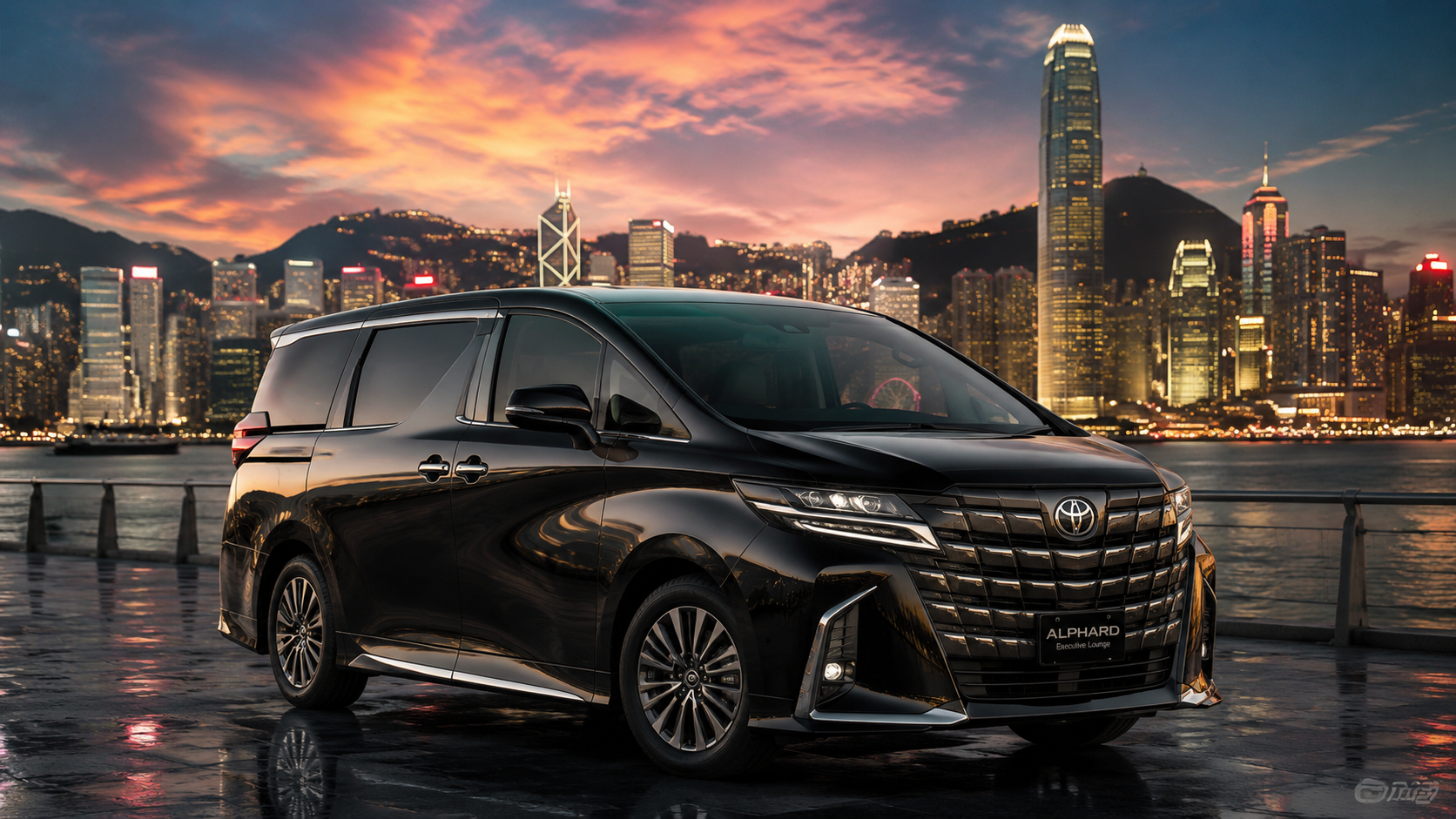
When suggesting car models, it's important to consider the number of passengers and luggage. The reference data parameters of the Toyota Alphard Premium model are the most comfortable for 1-6 passengers, with room for about 4 standard pieces of luggage. Prices start at HKD 1,800 per trip, making it more suitable for families, business receptions, trips with elders, and regular cross-border journeys. If the luggage exceeds the comfort range of the cabin, don't force it in; if you're uncomfortable sitting on a long cross-border journey, it's easier to move the luggage at the port, which may cause delays. High-end cars are suitable for arriving in style, but not all high-end cars are suitable for multiple pieces of luggage or child safety seats. For family trips, it's usually best to start with the Toyota Alphard or Vellfire. For corporate receptions, consider the business image and luggage space of the V-Class. If there are many pieces of luggage, consider the Granvia. Bentley and Rolls-Royce Phantom are suitable for the main guest or wedding car, with the luxury vehicle commonly used to carry the protagonist, and another MPV to carry friends, relatives, luggage, photographic equipment, or accompanying assistants.
Vehicle
- 7 seats
- From HKD 1,800
- Family or standard business cross-border trips
- 6 seats
- From HKD 2,200
- Corporate reception or exhibition teams
- 6 seats
- From HKD 2,400
- Large luggage loads or multi-generation families
- 4 seats
- From HKD 3,600
- VIP or high-net-worth family travel
- 4 seats
- From HKD 8,100
- Wedding lead car or top-tier VIP travel
05 / 07 Procedure after an accident
The cost typically consists of the basic departure location, destination surcharge, vehicle type surcharge, night or early morning surcharge, waiting time, and temporary parking. According to the reference standards of site fare table, the basic price from downtown Shenzhen to Kowloon, Hong Kong, starts at approximately HKD 700, with additional surcharges for destinations on Hong Kong Island. For routes passing through HK-Zhuhai-Macau Bridge in the direction of Zhuhai/Zhongshan/Jiangmen, the price is recalculated based on the regional basic price. The prices displayed on the page are only used for decision-making purposes and are subject to final confirmation through WeChat regarding the vehicle, date, route, and waiting time. If the quoted price is significantly lower than the market price, it is important to inquire whether it includes cross-border vehicle license, whether it covers insurance for the Hong Kong segment, whether the vehicle will be changed at the port, how night surcharges are calculated, how long the free waiting time is, and how additional charges are applied for temporary changes in destination. A transparent quotation may not necessarily be the lowest, but it can prevent surprises upon arrival at the port, such as discovering that parking fees, tolls, overtime charges, and driver subsidies have not been included in the original price.
06 / 07 Before placing an order, be sure to check the five terms
Customer feedback includes: the most feared is when the driver changes the port unexpectedly; the most feared is when the elderly get off the vehicle and walk too far; the most feared is when there is no one to pick up after a flight delay; and the most feared is when the night fee and parking fee are not clearly stated in the quotation. Therefore, each order should clearly state the departure address, passenger name in pinyin, type of identification, number of pieces of luggage, child seat, flight/high-speed rail number, destination drop-off point, and alternate contact person. These details are more effective in reducing risks than just saying "package border crossing". Business customers also care about whether the driver talks less, whether the interior of the vehicle is quiet, whether the air conditioning can be turned on in advance, whether a sign needs to be held up, and whether multiple stops can be accommodated. Family customers are more concerned about child seats, elderly boarding and alighting, luggage placement, and whether the driver is familiar with hospitals, hotels, or residential entrances.
07 / 07 What does customer feedback include
Before placing an order, it is recommended to send a screenshot of the route, the type of identification, the number of people, luggage details, desired vehicle type, and the required arrival time to customer service all at once. If the trip involves a wedding, medical treatment, business meeting, or nighttime arrival, it is also necessary to specify whether changing the port of entry is acceptable, whether the driver needs to hold a sign, and whether there are privacy or non-disturbance requirements. It is more stable to make payment after the dispatcher confirms the order, rather than repeatedly changing requirements just before departure. The confirmation slip should ideally include the vehicle license plate or model, driver contact time, free waiting time, overtime charges, cancellation rules, alternate ports, and emergency contact information. If travelers are arriving in groups, do not let the driver wait for a long time in a no-parking area. Instead, arrange for one of the travelers to gather everyone together and then notify the vehicle to approach.
 Add me on WeChat
  WhatsApp